The 72-Hour Window After Citation
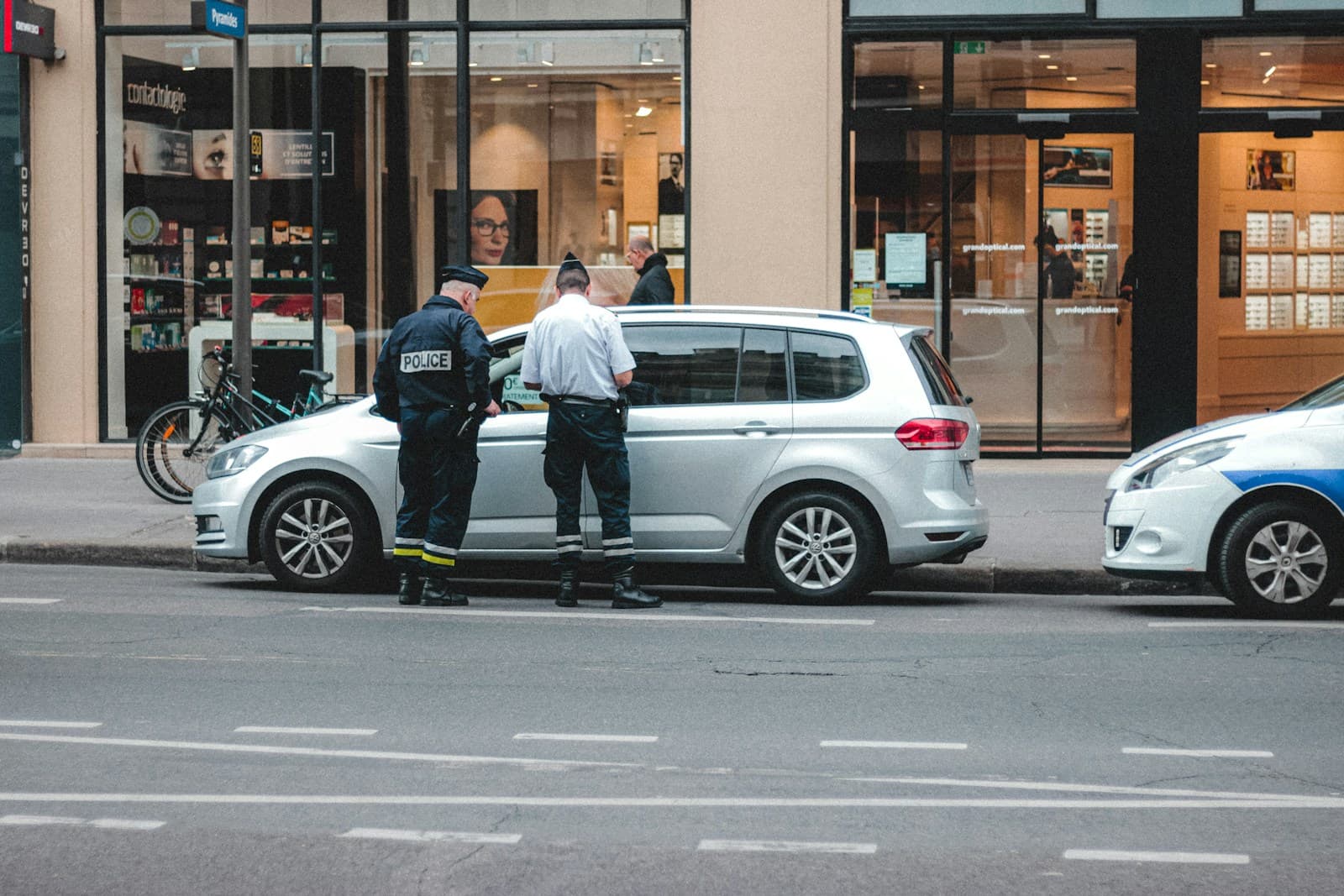
You were stopped, cited for driving without insurance under Idaho Code § 49-1232, and released. The officer likely told you to get coverage immediately. What the officer didn't say: Idaho Transportation Department's electronic Insurance Verification System logged the stop the moment the citation was written. Every carrier licensed in Idaho sees that flag when you apply. Standard-tier carriers—State Farm, Allstate, GEICO's preferred underwriting—decline automatically. Their systems treat an active uninsured-driving citation as uninsurable until resolved.
You have three realistic paths. First: carriers that specialize in post-violation coverage and don't auto-decline on recent citations. Second: accepting a policy with a coverage-effective date pushed past your court date, which leaves you uninsured until then and does not help at the hearing. Third: appearing in court without proof of insurance and facing a registration suspension on top of the original fine. Only the first path keeps your vehicle legally operable this week.
Compare car insurance rates in your state
Get quotes from licensed carriers — no obligation, no spam, results in minutes.
Get Your Free QuoteIdaho Registration Reinstatement Fee
$25
If the court suspends your registration for appearing without insurance, Idaho charges a $25 reinstatement fee once you provide proof of coverage. That fee is in addition to fines, and your vehicle cannot be driven until reinstatement is complete.
Idaho Code Title 49, Idaho Transportation Department
Why Standard Carriers Auto-Decline Your Application
Idaho's Insurance Verification System is a real-time reporting pipeline. When the officer wrote your citation, the stop event—including your VIN, driver's license number, and violation code—was transmitted to ITD's central database before you left the roadside. Carriers query this database during underwriting. An open uninsured-driving citation signals to their actuarial models that you were operating a vehicle without financial responsibility coverage as recently as yesterday.
Standard-tier carriers underwrite for low-risk profiles. Their pricing models assume you maintain continuous coverage and follow compulsory insurance law. A citation for violating that law disqualifies you from their risk pool until the citation is resolved and you demonstrate a period of compliant coverage. This is not a punitive decision—it's automated underwriting logic. The system sees the flag, applies the declination rule, and moves to the next application.
Non-standard carriers use different underwriting models. They price for drivers whose records include recent violations, lapses, and citations. Their systems do not auto-decline on an open uninsured-driving stop. Instead, they price the elevated risk into the premium and issue coverage immediately. This is why your quote from a non-standard carrier will be higher than what you would have paid from a standard carrier before the citation—but it is the only quote you will receive this week.
Standard-tier carriers cannot issue you a policy until the citation is resolved in court and you show at least 30 days of maintained coverage elsewhere. Non-standard carriers can issue today.
Three Carriers That Write Same-Day Coverage After Citation
Bristol West operates through the Farmers agent network and independent brokers. You cannot apply online—you must work with a licensed agent who has access to Bristol West's underwriting portal. The agent submits your application, VIN, and driver's license number. If your driving record contains no DUI convictions in the past 36 months and no at-fault accidents in the past 12 months, the system typically approves within 2–4 hours. The agent emails you a declarations page and ID card immediately upon approval. Bristol West requires liability limits at or above Idaho's state minimums: $25,000 per person, $50,000 per accident bodily injury, and $15,000 property damage. They do not offer same-day approval for comprehensive or collision coverage—liability only.
Dairyland and The General allow online applications but require phone verification for same-day issuance. Both carriers pre-approve your application online, then a licensed agent calls to confirm your identity, vehicle details, and coverage effective date. Once verified, the policy binds immediately and the declarations page is available for download within 30 minutes. Dairyland operates in 38 states; The General operates nationwide. Both write liability-only policies for drivers with active citations. Neither requires a down payment above the first month's premium. Dairyland's typical monthly premium for Idaho liability coverage after an uninsured-driving citation ranges from $110 to $180 depending on age, county, and vehicle type. The General's range is similar—$115 to $175 per month.
Related Articles




What Documentation You Need Before Applying
Have your citation number, the exact date of the stop, your Idaho driver's license number, and your vehicle identification number ready before contacting a carrier. Non-standard underwriting systems pull your MVR automatically, but the agent needs the citation details to note the application correctly. If you cannot provide the citation number, the approval process stalls—some carriers interpret missing citation data as an attempt to conceal the violation, which triggers a manual review that can delay issuance by 48–72 hours.
You also need the vehicle's current registration status. If ITD has already suspended your registration due to the uninsured stop, notify the agent immediately. Some carriers will not issue a new policy on a vehicle with suspended registration until you provide proof that the suspension has been lifted. This creates a circular dependency: you need insurance to lift the suspension, but the carrier will not insure a suspended vehicle. The workaround is to apply for coverage with an effective date set for the day after your court hearing, then request that the court lift the suspension contingent on proof of future coverage. Not all judges approve this—it depends on county and the specifics of your case.
If you do not currently own a vehicle but need to show proof of insurance at your court date, apply for a non-owner SR-22 policy. GEICO, Progressive, Dairyland, and The General all write non-owner policies in Idaho. A non-owner policy provides liability coverage when you drive a vehicle you do not own—borrowed cars, rental cars, employer vehicles. It satisfies Idaho's financial responsibility requirement and can be used as proof of insurance in court. Monthly premiums for non-owner policies after an uninsured-driving citation typically range from $45 to $85.
Idaho Electronic Reporting Lag
1–5 business days
Idaho's Insurance Verification System transmits policy issuance and cancellation events to ITD within 1–5 business days. If you buy coverage today, ITD may not register your compliance until next week. Bring your declarations page to court—do not rely on the court's ability to query ITD's database in real time.
Idaho Transportation Department – Division of Motor Vehicles
Court Hearing Strategy and Proof of Coverage
Print two copies of your declarations page. One stays with you; the other goes to the clerk when you check in. Idaho courts accept declarations pages as proof of current coverage, but the document must show a policy effective date on or before your citation date to demonstrate compliance at the time of the stop—or, if you were genuinely uninsured at the time of the stop, a policy effective date on or before your court date to demonstrate current compliance. Most judges reduce fines or dismiss the charge outright if you show proof of current coverage and a clean record before the citation.
If your policy effective date is after your citation date—meaning you were uninsured at the stop and bought coverage afterward—bring proof of payment for your first month's premium in addition to the declarations page. Some judges interpret payment as evidence of intent to comply going forward, which can influence their decision on fine reduction. Do not rely on this—it is discretionary, not guaranteed.
What Happens If You Apply and Get Declined
If Bristol West, Dairyland, or The General decline your application, the most common reason is an unresolved DUI conviction within the past 36 months or a recent at-fault accident combined with the uninsured-driving citation. In that case, your next option is GAINSCO or National General, both of which write high-risk non-standard policies in Idaho but require longer approval windows—typically 24–48 hours instead of same-day.
You can also apply for an SR-22 filing even if SR-22 is not legally required for your citation. Some non-standard carriers prioritize SR-22 applications because the filing creates a direct reporting relationship with ITD, which reduces the carrier's compliance risk. If you request an SR-22 filing as part of your application, your approval odds increase slightly, though your premium will be $15–$25 per month higher due to the filing fee. The SR-22 filing itself costs carriers approximately $25–$50 to process, and they pass that cost to you either as a one-time fee or spread across your monthly premium.
If you are declined by all non-standard carriers, you are in assigned-risk territory. Idaho does not operate a traditional assigned-risk pool, but the state does require carriers to participate in residual market mechanisms for drivers who cannot obtain voluntary coverage. Contact Idaho Transportation Department's Driver Services division at itd.idaho.gov/dmv for guidance on accessing residual market coverage. Be prepared for premiums 150–200% higher than non-standard voluntary market rates.