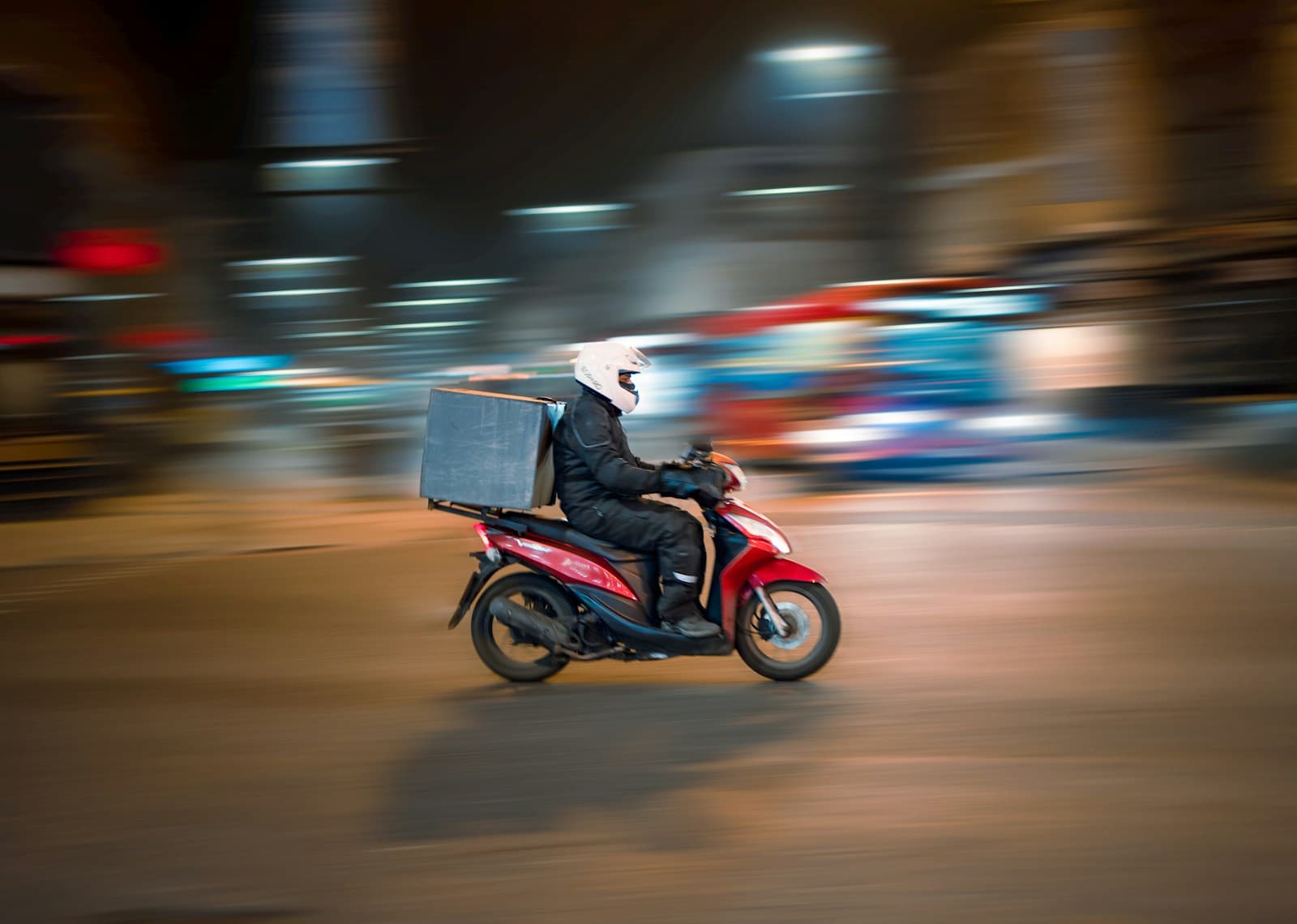
Why Most SR-22 Quotes Exclude Delivery Platform Work
You secured SR-22 quotes from three carriers, disclosed your DoorDash or Instacart driving honestly, and watched every quote vanish or double when underwriting caught the commercial-use flag. This is not carrier error. Personal auto policies — including non-standard SR-22 policies — exclude coverage when your vehicle is used for commercial delivery, rideshare, or food-transport platforms. The SR-22 filing itself costs $25-$50, but the policy beneath it must cover your actual use, and delivery work triggers a different underwriting tier.
Idaho carriers treat delivery platform work as commercial exposure because you're transporting goods for hire. Standard personal-auto exclusions void coverage for accidents that occur while logged into the platform app, even if you weren't carrying an order at the moment of impact. You need either a personal policy with a commercial-use endorsement, or a commercial policy that accepts SR-22 filing. Both exist, but the overlap of carriers who write SR-22 and accept gig platform endorsements is narrow — and that scarcity drives price.
Compare car insurance rates in your state
Get quotes from licensed carriers — no obligation, no spam, results in minutes.
Get Your Free QuoteIdaho SR-22 Filing Period
3 years
Idaho requires continuous SR-22 filing for three years after most suspension triggers. If your carrier cancels your policy or you let coverage lapse for any reason during that period, the Idaho Transportation Department receives electronic notification within 24 hours and re-suspends your license immediately.
Idaho Code § 49-1229, ITD Division of Motor Vehicles
Which Idaho Carriers Write SR-22 for Delivery Drivers
Progressive and National General are the two carriers most consistently quoting delivery drivers with SR-22 requirements in Idaho. Progressive offers a Transportation Network Company (TNC) endorsement that extends personal-auto coverage to gig platform use; National General writes similar hybrid policies. Both accept SR-22 filing. Dairyland occasionally writes delivery drivers depending on violation type and platform, but their underwriting is inconsistent for food-delivery apps.
GEICO writes SR-22 in Idaho but excludes delivery platform use categorically — their SR-22 filing is available only if you stop platform driving entirely or carry separate commercial coverage. The General writes SR-22 but does not offer delivery endorsements; their policies cover personal use only. State Farm and Allstate both exclude gig platform work from personal policies and do not offer hybrid endorsements in Idaho.
Bristol West writes non-standard SR-22 policies in Idaho but will not cover delivery platform mileage under any endorsement. GAINSCO writes SR-22 for high-risk drivers but excludes commercial use. If you quote with a carrier not listed here, read the exclusions section of your policy declarations page before accepting — the words 'delivery,' 'transportation for hire,' or 'commercial use' in the exclusions block void your coverage while logged into the app, even if the carrier accepted your SR-22 filing.
You cannot separate your SR-22 filing from your delivery driving. Idaho requires the SR-22 be attached to an active policy covering the vehicle you drive — a non-owner SR-22 does not work if you own the car you deliver in.
How to Structure Coverage That Passes Platform Background Checks

First, the policy must carry Idaho's minimum liability limits: $25,000 bodily injury per person, $50,000 bodily injury per accident, $15,000 property damage. These are the state reinstatement minimums and the platform verification floor. Second, the policy must include an endorsement explicitly covering delivery platform use — either a named TNC rider or a commercial-use extension. The endorsement language must appear on your declarations page because platforms verify coverage by requesting that document directly from your carrier.
Third, the SR-22 certificate must be filed electronically by the carrier to the Idaho Transportation Department and remain active without lapse for the full three-year period. If you switch carriers mid-filing period, the new carrier must file a replacement SR-22 before the old carrier cancels their filing — a gap of even one day re-suspends your license and triggers platform deactivation. Request the new SR-22 filing at least five business days before your old policy end date to avoid this gap.
Related Articles


What Delivery Platform Endorsements Cost in Idaho
Progressive's TNC endorsement for delivery drivers typically adds $40–$80 per month on top of the base SR-22 policy premium in Idaho. National General's commercial-use rider runs $50–$100 per month depending on platform, annual mileage, and violation history. These are not SR-22 filing fees — the SR-22 itself is a $25–$50 one-time charge. The endorsement premium reflects the additional liability exposure carriers price into delivery work.
Carriers calculate endorsement cost by multiplying your base premium by a commercial-use factor, then layering the SR-22 surcharge on top. A driver paying $120/month for standard liability coverage might see that jump to $200–$280/month once the delivery endorsement and SR-22 are added. The SR-22 portion of that increase is roughly $15–$35/month; the rest is the platform-use premium.
If your only violation is the suspension trigger itself — no DUI, no at-fault accidents in the past three years — you'll land at the lower end of that range. Multiple violations, recent claims, or a DUI stacked on top of the suspension push you to the upper end. Dairyland occasionally quotes below Progressive for clean-record suspended drivers doing delivery work, but their appetite for this risk class varies by underwriting cycle and they may not quote at all depending on your suspension reason.
Idaho License Reinstatement Fee
$25
After your suspension period ends, Idaho charges a $25 base reinstatement fee to restore your license. DUI-related suspensions carry higher fees set by statute. This fee is separate from your SR-22 insurance cost and must be paid to the Idaho Transportation Department before your driving privileges are restored.
Idaho Code § 49-326
Non-Owner SR-22 Does Not Work for Delivery Drivers Who Own Vehicles
Non-owner SR-22 policies cover drivers who do not own a vehicle but need to satisfy state filing requirements. If you own the car you deliver in — even if it's financed or leased — Idaho requires the SR-22 be attached to a standard policy naming that vehicle. Non-owner policies explicitly exclude coverage for vehicles the policyholder owns, registers, or has regular access to. Delivery platforms verify vehicle ownership through DMV records and will flag the mismatch if your SR-22 is filed as non-owner but you're registered as the vehicle owner.
The only scenario where non-owner SR-22 works for delivery drivers is when you drive a vehicle owned by someone else — a spouse, parent, or platform rental — and that vehicle is insured under a separate policy held by the actual owner. In that case, the non-owner SR-22 satisfies Idaho's filing requirement without triggering the commercial-use exclusion problem, because you're not the named insured on the vehicle policy. Verify with the platform that they accept this structure before purchasing non-owner coverage, because some platforms require the driver to be a named insured on the vehicle policy regardless of ownership.
Compare Carriers Writing Your Actual Use Case
Request quotes from Progressive and National General first — both accept SR-22 filing and offer delivery endorsements in Idaho. Specify the platform you drive for (DoorDash, Uber Eats, Instacart, etc.), your weekly platform hours, and your suspension trigger when you request the quote. Underwriters price these variables differently; withholding platform details produces an initial quote that gets rescinded once disclosed.
If Progressive and National General both decline or quote above your budget, contact independent agents who write Dairyland and ask explicitly whether they're currently writing delivery drivers with SR-22 requirements. Dairyland's appetite for this risk class fluctuates, and agents have real-time underwriting guidance that the online quote tool does not reflect. Confirm before binding that the policy includes the delivery endorsement on the declarations page and that the SR-22 will be filed electronically to the Idaho Transportation Department within 24 hours of policy inception. Missing either of those steps leaves you uninsured for platform work or non-compliant with Idaho's reinstatement requirements, and both platform deactivation and license re-suspension follow immediately.