
When Idaho Requires SR-22 After Your Accident
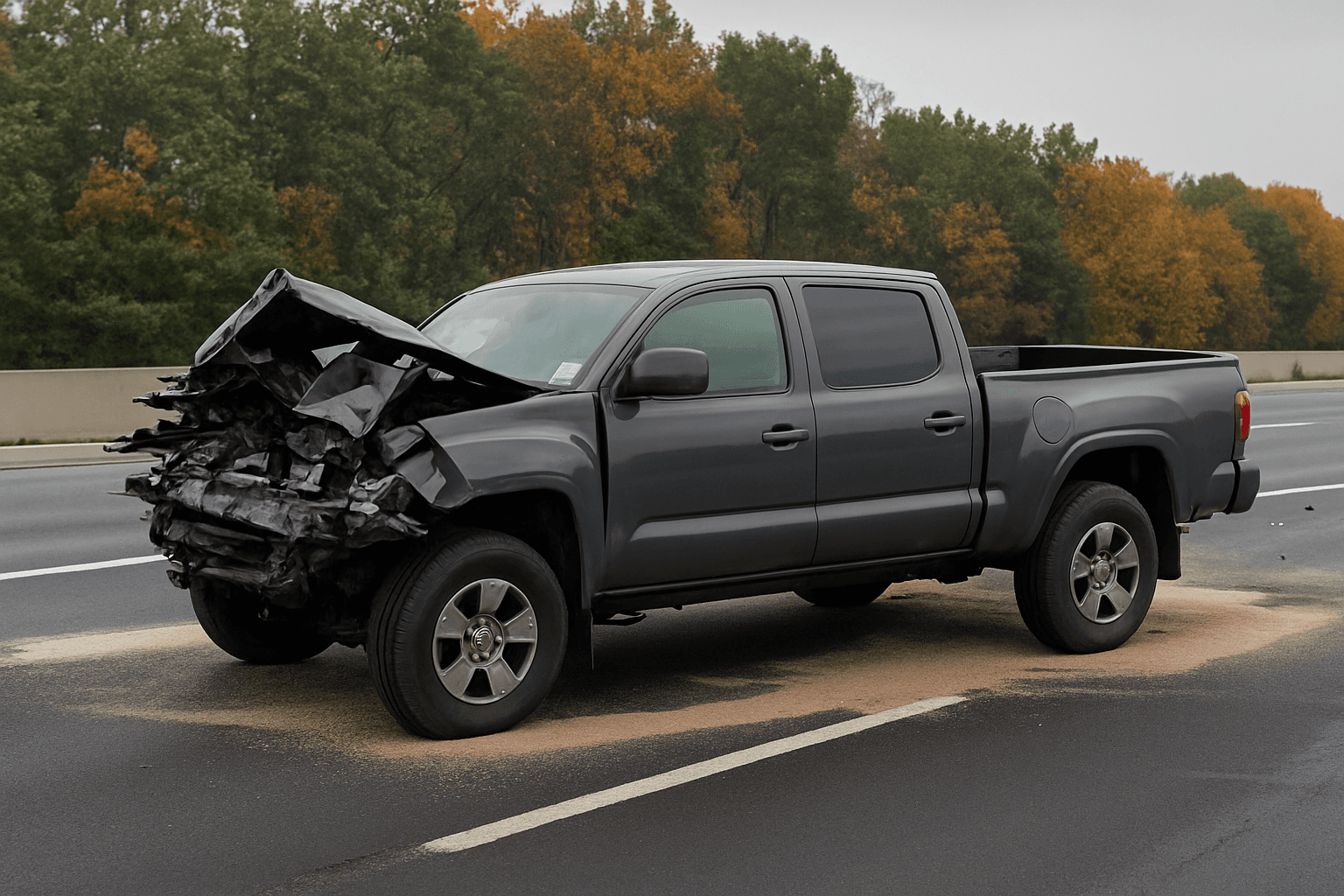
You caused an accident in Idaho and the Idaho Transportation Department sent a suspension notice requiring SR-22 proof of insurance before reinstatement. Not every at-fault accident triggers SR-22 filing. Idaho imposes the requirement when you caused an accident while driving uninsured, when the accident involved bodily injury or property damage above Idaho's liability minimums, or when the accident occurred during an existing suspension period. If you were insured at the time of impact and the accident involved only minor property damage, SR-22 is typically not required unless other violations are stacked on your record.
The distinction matters because SR-22 adds a three-year continuous filing requirement on top of whatever premium increase the accident itself produces. Carriers price accident history and SR-22 filing as separate risk factors. You're paying for the accident rating impact plus the administrative cost and underwriting restriction of writing a non-standard SR-22 policy. Understanding which piece of your situation triggered the filing requirement helps you evaluate whether appealing the suspension or contesting fault has any procedural pathway left.
Compare car insurance rates in your state
Get quotes from licensed carriers — no obligation, no spam, results in minutes.
Get Your Free QuoteIdaho Reinstatement Fee
$25
Idaho charges a $25 base reinstatement fee once you satisfy the SR-22 filing requirement and any suspension period. DUI-related suspensions carry higher reinstatement fees under Idaho Code § 49-326, but standard at-fault accident suspensions use the base amount.
Idaho Transportation Department Driver Services
Why Your Quotes Jumped Into Non-Standard Territory
The accident moved you into Idaho's non-standard auto insurance market. Standard carriers either decline to write SR-22 policies entirely or price them so high that their quotes are functionally unavailable. Preferred-tier carriers like USAA, Amica, and Auto-Owners rarely write SR-22 for at-fault accident filers. Standard-tier carriers like State Farm and Geico write SR-22 in Idaho, but their underwriting guidelines push post-accident SR-22 risks into higher rate classes that price you out of affordability.
Non-standard carriers specialize in high-risk drivers and structure their underwriting specifically for SR-22 filers. Bristol West, Dairyland, GAINSCO, The General, and National General all write SR-22 policies in Idaho and price accident history as a core underwriting variable rather than an exception case. Their rates for clean-record drivers are typically higher than standard carriers, but their rates for drivers with accidents and SR-22 requirements are often lower because they spread risk across a pool where your profile is the expected norm.
The pricing gap between standard and non-standard carriers narrows as your accident ages. After three years your violation falls off the continuous SR-22 filing requirement, and after five years most carriers treat the accident as aged out of major surcharge territory. You're shopping for coverage today at the steepest point of the pricing curve. The goal is to find the cheapest non-standard carrier that writes your county, satisfy the three-year SR-22 period without a lapse, and re-shop annually as your record ages.
An SR-22 lapse during the three-year filing period resets your suspension and restarts the clock from day one.
Which Idaho Carriers Write Post-Accident SR-22
Bristol West operates through the Farmers agent network and independent agents across Idaho. They write SR-22 for at-fault accidents and typically offer the lowest rates for drivers whose accident is the only major violation on their record. Bristol West's underwriting treats single-incident accidents more favorably than stacked violations. If your accident was your first and only major violation in the past five years, start your comparison here. Bristol West requires working through an agent; they do not offer direct online quotes.
Dairyland writes SR-22 directly online and through independent agents. Their pricing is competitive for drivers with one or two violations but rises sharply if your MVR includes a DUI, multiple at-fault accidents, or a suspended-license driving charge. GAINSCO operates similarly and writes SR-22 online with quick quoting. The General specializes in high-risk drivers and often provides the lowest rate when other carriers decline or price you into unaffordability. National General is now part of Allstate's non-standard tier and writes SR-22 statewide; their rates fall between Bristol West and The General depending on county and age bracket.
Related Articles



How Idaho's Three-Year SR-22 Period Works
Idaho requires SR-22 filing for three years from the date the Idaho Transportation Department receives your initial SR-22 certificate, not from your accident date or conviction date. The filing must remain continuous without any lapse. If your carrier cancels your policy for non-payment or you switch carriers without ensuring the new carrier files SR-22 before the old policy ends, Idaho receives an SR-26 cancellation notice from the departing carrier. That triggers an automatic suspension.
The suspension restarts your three-year clock. You lose credit for however many months or years you maintained the filing before the lapse. The ITD does not prorate or give partial credit. A lapse in month 34 of a 36-month requirement resets you to month zero. You pay a new reinstatement fee, refile SR-22, and serve the full three years again. This is the most common failure mode for post-accident SR-22 filers who assume switching carriers mid-period is risk-free.
To avoid lapses when switching carriers, obtain the new policy with SR-22 filing confirmed before canceling the old policy. Confirm the new carrier has submitted the SR-22 certificate to the ITD before your old policy's cancellation date. Most non-standard carriers file electronically and the ITD receives confirmation within one business day, but assuming same-day filing without verification produces the exact lapse scenario that restarts your clock. Call the ITD Driver Services line at the number on your suspension notice to confirm they have received the new filing before you cancel the outgoing policy.
Idaho SR-22 Filing Period
3 years
Idaho Code requires SR-22 filing for three years for most suspension types involving at-fault accidents, insurance lapses, or uninsured driving. The clock starts when ITD receives your certificate, not when you purchase the policy.
Idaho Code Title 49
What Coverage Limits You Actually Need
Idaho's minimum liability limits are $25,000 per person for bodily injury, $50,000 per accident for bodily injury, and $15,000 for property damage. Those are the floors. You can purchase SR-22 filing at minimum limits, and the ITD will accept the certificate as satisfying the filing requirement. Minimum limits keep your premium as low as possible during the three-year SR-22 period, but they expose you to significant out-of-pocket liability if you cause a second accident before the filing period ends.
If you cause an accident that injures two people and total damages exceed $50,000 for bodily injury, your policy pays the first $50,000 and you are personally liable for the remainder. Idaho does not cap personal liability for damages your policy does not cover. Post-accident SR-22 drivers are already in the high-risk pool; a second accident while carrying minimum limits often produces both unaffordable premium increases and direct wage garnishment or asset seizure to satisfy the excess judgment. Evaluate whether slightly higher limits—$50,000/$100,000/$25,000 or $100,000/$300,000/$50,000—fit your budget. The rate difference between minimum and mid-tier limits on a non-standard SR-22 policy is typically smaller than the surcharge a second accident produces.
Compare Rates Across All Five Non-Standard Carriers
Non-standard SR-22 carriers price accident history using different underwriting models. Bristol West may quote you $140 per month while GAINSCO quotes $190 and The General quotes $110 for identical coverage limits in the same ZIP code. The variation comes from how each carrier weighs your specific combination of age, accident date, vehicle type, and county. There is no predictable hierarchy of which carrier is cheapest for post-accident SR-22 in Idaho because the ranking flips depending on your individual profile.
Request quotes from all five carriers that write SR-22 statewide: Bristol West, Dairyland, GAINSCO, The General, and National General. Include your accurate accident date, the damage amount if known, and whether you were cited for any additional violations at the scene. Underwriting uses all of those inputs to calculate your rate class. Omitting the accident or misstating the date produces a quote that will be rescinded when the carrier pulls your MVR during binding. Compare the annual premium and the per-incident deductible if you're adding collision or comprehensive coverage. Choose the lowest annual cost that you can afford to maintain without lapse for the full three-year period. Saving $20 per month by choosing a cheaper carrier that you cannot afford six months from now produces a lapse that costs you thousands in restart fees and extended filing time.